


How Much Money Do You Need to Buy a House on Long Island?

Updated: Aug 27
Quick & Easy Answer
You do not necessarily need 20% down to buy a house on Long Island.
But your down payment also isn't the only money you need.
A better way to plan is to think about your cash in four buckets:
Down payment
Closing and transaction costs
Immediate house expenses
Money you deliberately save.
Everyone ignores the fourth section.
I want to focus on the morning after you close for a second.
Because getting the keys with $412 left in your checking account is technically homeownership. It's just not my favorite version of it.

First: Stop Using 20% as the Starting Line
One of the most persistent home-buying myths is:
“I can't buy yet because I don't have 20% down.”
Depending on your qualifications and financing, buyers may have access to conventional loans with lower down payments, FHA financing, VA financing for eligible borrowers and certain assistance programs. Realistically you should be using 3% to 5% in your estimates, and I’ll explain why below.
When someone tells me:
“I have $80,000 saved. Is that enough?”
My answer isn't immediately yes or no.
I want to know: Enough for what?
What price range? What taxes? An FHA loan or Conventional Loan? What monthly payment? What other debt? What condition of house?
And heres a great question: How much of that $80,000 are we actually comfortable spending? Having $80,000 and spending $80,000 are two very different things.
Note: SO many people confuse Down payment and Closing Costs. So, let’s take a minute here:
Down Payment Is Only Bucket #1
Let's say you're considering a $700,000 home.
Twenty percent would be $140,000.
Ten percent would be $70,000.
Five percent would be $35,000.
That difference dramatically changes the amount of cash you need upfront (obvi)
But it can also change the mortgage amount, monthly payment, mortgage insurance and potentially the financing options available to you.
This is why I don't automatically worship the largest down payment.
We're solving an equation, often down payment is the last piece of the puzzle I work out. Sometimes putting more down creates the strongest position.
Sometimes preserving $30,000 or $40,000 in liquidity is substantially more valuable than forcing that money into the house.
Cash has optionality.
Once cash becomes equity, accessing it again isn't as simple as moving money out of your savings account. (You have to QUALIFY again to get that money)
Bucket #2: Closing Costs
This is where buyers start to really understand that the down payment was only part of the assignment. Long Island buyers should expect additional transaction expenses beyond the down payment. Those can include things like:
Attorney fees
Lender fees
Appraisal
Credit and underwriting-related charges
Title-related expenses
Recording charges
Mortgage-related taxes
Homeowners insurance
Prepaid interest
Property-tax escrows
Insurance escrows
Tax adjustments or reimbursements
Other property-specific adjustment
The exact amount depends on the property, financing, loan amount, taxes and timing of the closing. That's why I don't love giving buyers one magical percentage and sending them on their way.

We estimate early. Refine it once we know the property.
Your lender and attorney should ultimately provide the transaction-specific numbers as you are closing. The goal at the beginning isn't to predict your closing statement down to the cent, It's to make sure we aren't spending your entire savings account on closing day.
Why Long Island Property Taxes Matter Before You Even Own the House:
We talk about property taxes constantly when calculating monthly affordability.
But they can affect upfront cash too. Depending on your financing and when taxes are due, money may need to be collected or adjusted at closing.
The house price doesn't tell us everything.
The property itself matters.
This is another reason I prefer looking at specific houses financially rather than saying: “You're a $700,000 buyer.”
A $700,000 house with one tax profile (say 12K in taxes in Lake Grove, NY) and a $700,000 house (Say, with 17K taxes in Woodbury, NY) aren't the same financial decision.
Bucket #3: The Money You'll Spend Before You Get the Keys
Some home-buying expenses happen before closing.
Depending on your transaction, you may encounter expenses associated with things like the inspection, appraisal or other due-diligence needs.
Then there are the expenses nobody puts on the “We Bought a House!” Instagram post or blogs. you’re welcome for this
Moving.
Furniture.
Paint.
Locks.
A lawn mower.
Window treatments.
The Home Depot trip where somehow six completely boring things cost $487.
Been there one too many times...
You don't need to furnish every room immediately.
You do want some room in the budget for reality.
Realistically you should budget $2,500 on the low side and 10K on the high side for moving, missing work, new expenses, etc.
(I KNOW you are rolling your eyes at me, but those little things all add up - please DM me if you make it out under 2500, all in, id be thoroughly impressed.)
Bucket #4: The Money You Keep
This is the bucket I want to focus on more than any other realtor.
Let's say you have $125,000 available.
And technically, we could structure the purchase so nearly all $125,000 goes toward the transaction.
That doesn't mean we should. *we should not..
Maybe our better plan is:
$85,000 toward the purchase.
$40,000 stays yours.
Why? Because after closing, the furnace will go out. The A/C will need maintenance or the largest snow to hit the island will come rolling in before you get your snow blower set up.
Cash reserves give you options.
They can cover an unexpected repair.
They can keep you from putting a major expense on a credit card.
They can give you the ability to make an improvement that increases the property's usefulness or value.
And sometimes their greatest value is simply that you know they're there.
How Much Should You Have Left After Buying a House?
There isn't one number that's right for everybody.
This is where generic advice irritates me, I know you want some numbers. (see below)
Someone with stable dual incomes, very little debt and significant investments may reasonably choose a different reserve strategy than someone with variable income or several large monthly obligations.
I want to understand:
Income stability
Monthly expenses
Generational family members living with you
Other savings
Investments
Upcoming life changes
Property condition
Likely near-term repairs
Your personal comfort level
And then we determine the amount of liquidity we want to protect.
Notice the language there:
Protect.
Not “whatever happens to be left.”
We decide that number intentionally.
Option 1- stable dual incomes, very little debt and significant investments (a mini nest egg like 5K to 7K is reasonable to start with)
Option 2- variable income or unstable job, kids with high financial needs like special schooling etc - (id shoot for more like 15K -25K, especially with kids)
*add ons: 5K per kid. 10K per family member you support without help, below are some examples:
FAMILY RESPONSIBILITY: | Two Parents / 2 kids | Two Parents & 1 Kid | 3 Kids & Grandma |
DEBT RESPONSIBILTY: | Low Debts | Medium Debts | Medium Debts |
INCOME SITUATION: | Dual Stable Income (both W2 income earners with job security) | Single Income Stable / One unstable (like a new business owner) | Income Unstable (1099 work, Construction, seasonal - etc) |
RECCOMENDED ZONE: | Safe Zone- At least 5-7K | Safe Zone 10-15K | Safe Zone 15-25K |
A Better Way to Calculate How Much You Need to Buy A House on Long Island:
Instead of saying:
“I need $140,000 because that's 20% of $700,000.”
Try this:
Step 1: Establish your available cash.
Let's hypothetically say: $120,000
Step 2: Decide what amount you refuse to spend.
Maybe you decide you want at least: $30,000 remaining after closing.
Now our actual working capital is: $90,000.
Step 3: Estimate transaction costs.
Before shopping seriously, your lender can help us build a realistic estimate based on your likely price range and financing.
Step 4: Determine what remains available for the down payment.
Now the down payment becomes an output of the strategy, instead of the strategy itself.
That's a much better way to think.
NOTE: Down payment is FLEXIBLE, it can move, if we start with 5%, and we find a house but need money to redo the floors, we can move it to 3%, to give us some extra money- you see how a professional advocate really starts to matter?
What If You Have Enough for the Down Payment
but Not Much Else?
Then I don't think the conversation should automatically become:
“You can't buy.” It should become: “What needs to change for this to become a strong purchase?”
Maybe that means saving longer.
Maybe it's a lower price.
Maybe it's a different financing structure.
Maybe there's debt we should address first.
Maybe your current position is actually better than you thought.
We don't know until we run the numbers, AND New York is full of programs people know nothing about, just the other day I was at an open house and someone said to me "I cant use first time homebuyer programs because I bought a home 10 years ago"
This is not true, if your name has not been on a deed for 3 years, you can in-fact use these programs, SHE WAS SHOCKED!
Plus, Income limits on these programs can be 250K sometimes because it’s so expensive to live here.
If a good advocate knows your situation, they can identify a missing piece, and then, A defined gap can become a plan.
Ya feel me?
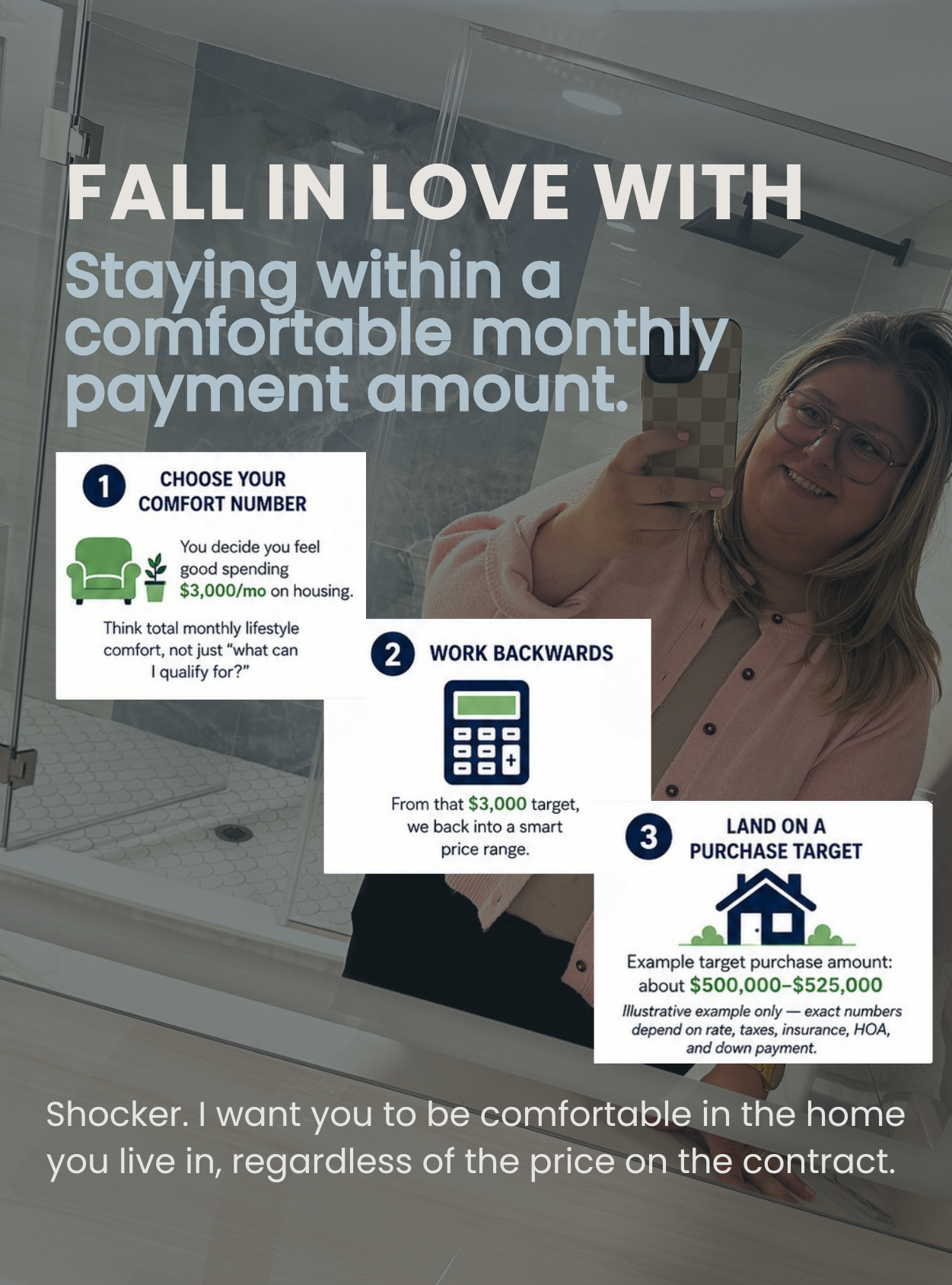
Should You Put 20% Down If You Can?
Maybe.
I know that's an annoyingly unsatisfying answer. But it's the correct one. Twenty percent down may reduce your loan balance and could eliminate certain mortgage-insurance costs depending on the financing. Great. But suppose getting to 20% requires taking your available cash from $175,000 to $20,000.
-> I want you to be comfortable in the home you live in, regardless of contract price.
Meanwhile, putting 15% down leaves you with materially more liquidity.
Now we have something worth comparing.
What's the difference in payment?
What's the difference in mortgage insurance?
What does keeping the additional cash allow you to do?
What does the house need?
What other investments or obligations do you have?
I want to compare the cost of keeping the cash with the value of keeping the cash.
That's an investor-minded decision.
Not a rule of thumb.
What About First-Time Home Buyer Programs?
Some buyers may qualify for programs designed to reduce upfront barriers to purchasing.
Eligibility can depend on income, property, occupancy, financing and program-specific requirements.
These programs can absolutely be worth investigating.
But I don't want the strategy to become:
“What's the program that lets me put the least money down?”
I want to know which financing structure leaves you in the strongest overall position. Those aren't always the same thing.
Don't Forget What Happens After Closing
Buying the house is not the finish line.
It's when ownership begins.
That means your financial plan should account for things like:
Repairs
Maintenance
Utilities
Insurance
Property taxes
Improvements
Emergency expenses
You don't need a giant pile of cash waiting for catastrophe.
But if purchasing the house requires completely draining your financial reserves, I want us to look very carefully at the tradeoff we're making.
The goal isn't simply:
Buy the house.
The goal is:
Acquire the right asset, correctly.


Comments